

 By Angel Flores

On this page6 sections
I get that question a lot. It usually comes right after I tell someone I’m a marketing operations director. Most of the time, they’ve already hired a marketing agency, a designer and a developer, and they can’t picture where I’d fit. Or they’ve seen a site I built and figured that’s what I do: websites.
A website is one piece of what I build. It isn’t the job.
Here’s the short answer. Strategy says where to go. Creative says what to say. Marketing operations makes sure it gets there.
The longer answer is this page. It covers what marketing operations is, the other names you may have heard for it, and seven signs your business needs it. Count how many of the signs sound familiar. If it’s three or more, another agency won’t fix the problem.
- 1Marketing operations owns the engine behind the marketing team: the tools, data, lead flow, automation, reporting and process.
- 2Agencies, designers and developers each make something. Marketing operations makes sure all of it runs, repeats and can be measured.
- 3Most problems that look like bad marketing actually live in the gaps between those hires.
- 4You don’t need a full-time hire to get it.
New to terms like workflow, integration or source of truth? Systems, Workflows, Automation and More, Explained defines them, one term at a time.
What marketing operations is
Marketing operations owns the engine behind the marketing team. That means the tools, the data, the lead flow, the automation, the reporting and the process that let your strategy and your creative actually ship.
Most marketing roles make something: a campaign, an ad, a design, a plan. Marketing operations asks a different question about all of it. Can this run, repeat and be measured?
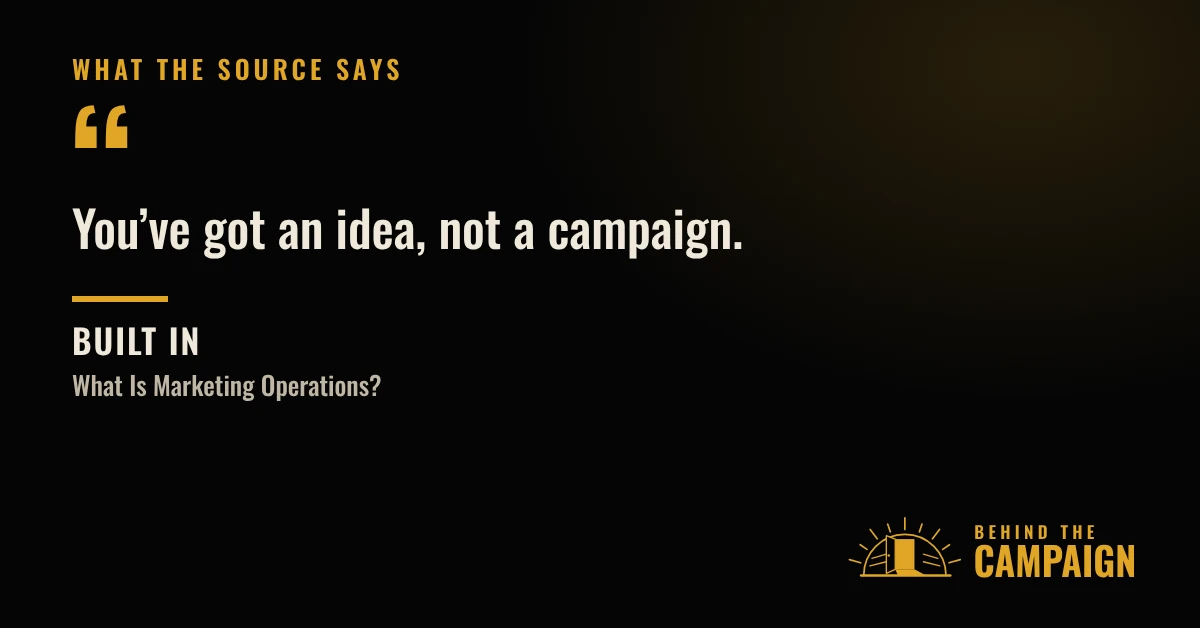
Built In, a publication about the tech industry, describes marketing operations as the people, processes and technology that let a marketing team run and grow. Its way of putting the stakes is hard to beat. Without the operations behind a plan, "you’ve got an idea, not a campaign."
It also helps to know what marketing operations isn’t:
- It isn’t campaigns. It doesn’t run your ads or write your posts. It makes sure what they bring in gets captured, followed up and counted.
- It isn’t design. It doesn’t create your brand. It makes sure your brand shows up the same way in every form, email and page.
- It isn’t just a website. The website is where most leads first show up, so it matters. But the job is everything the site connects to: the forms, the CRM, the follow-up and the reports.
- It isn’t IT. IT keeps devices, accounts and security working. Marketing operations runs the marketing tools and the data inside them.
- It isn’t a fractional CMO. A CMO owns the strategy and the budget. Marketing operations owns the engine that carries the strategy out.
It doesn’t stop at the edge of marketing, either. A lead becomes a client, the client gets onboarded, and the work gets delivered and billed. Good marketing operations hands each new client cleanly to the next team, instead of dropping them at the door.
Names you may have heard
You may already know this work by another name. Or you know pieces of it, without knowing they belong together.
Other names for the same work
- Marketing ops, MOps, MarOps or MarkOps. All short for marketing operations. Different companies just shorten it differently.
- Marketing technology, or martech. The tools themselves: your CRM, email and automation platforms, forms and analytics. Marketing operations is the role that chooses them, connects them and keeps them running.
- Martech stack, or tech stack. The full set of marketing tools your business uses, and how they connect.
- Marketing technologist, martech manager or marketing systems manager. Job titles you’ll see in job posts for people who do much of this work.
- Marketing automation. One piece of the job: the follow-up and routing that run on their own. It’s often the name of the software, too.
- CRM admin. Another piece: keeping the CRM’s fields, lists and permissions in order.
Neighbors: related, but a different job
- Revenue operations, or RevOps. TechTarget describes it as bringing sales, marketing and service together for a fuller view of the customer, while each department keeps running its own day-to-day work. Marketing operations is one piece of that.
- Sales operations. The same idea, for the sales team only.
- Creative operations. How creative work gets briefed, reviewed and delivered. It overlaps with marketing operations, but it’s about the creative process, not the engine.
- Demand generation and growth marketing. Campaign roles that create interest. They depend on marketing operations to capture it and measure it.
- Fractional CMO. A part-time head of marketing who owns strategy and budget. It isn’t the same as a part-time marketing operations director.
7 signs you need marketing operations
Read these with your own business in mind, and count how many sound familiar.
Someone fills out your form. The lead gets added to a list nobody is assigned to, or forwarded to an info@ inbox, where it sits between vendor pitches and spam. There’s no owner, no next step and no clock on the reply. The workflow just stops at the form.
What marketing operations does: routes every lead to a person, with where it came from, what happens next and a reminder if nobody acts. See Lead capture and forms.
The CRM says one number. The email platform says another, and the ads dashboard says a third. Meetings turn into arguments about which number is right, and nobody trusts the report. You don’t have a source of truth.
What marketing operations does: decides which tool is the source for each number, defines words like "lead" once, and connects the tools so they agree. See Reports and dashboards.
The creative is ready. Then the launch waits on forms, lists, emails, tracking links and fixing whatever broke last time. Every campaign starts from scratch, because the steps were never written down as a workflow.
What marketing operations does: builds the launch once, with templates, a checklist and an owner, so the next campaign reuses it. See Projects and tasks.
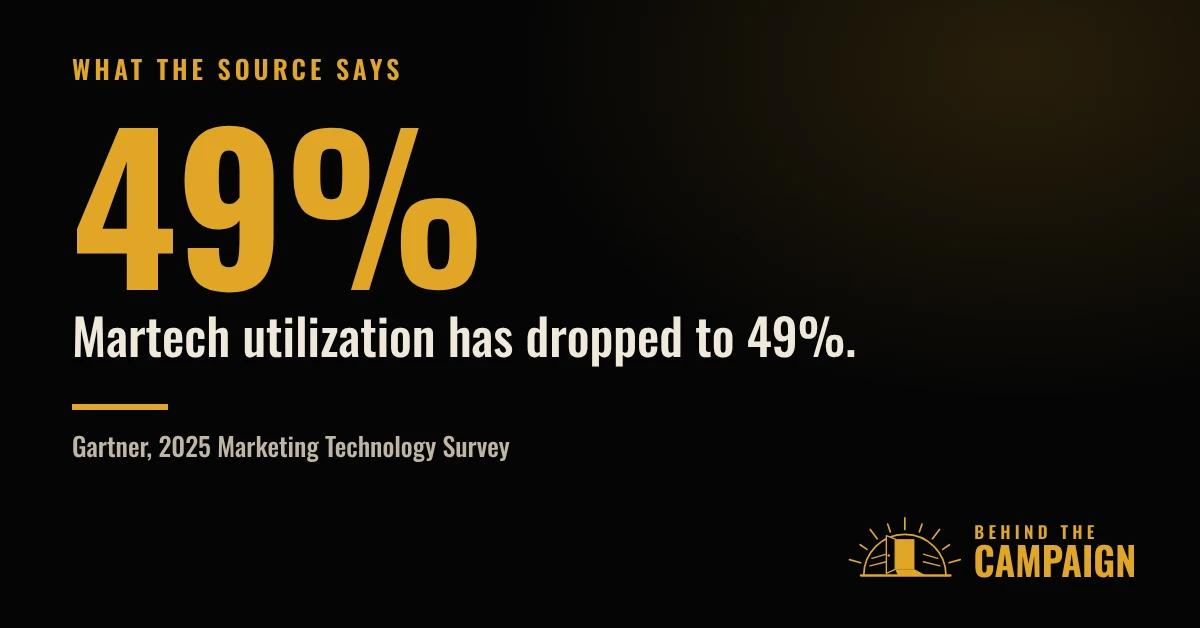
Seats nobody logs into. Features nobody turned on. Two or three tools that do the same job. You’re not alone in this. Gartner’s 2025 Marketing Technology Survey found that "martech utilization has dropped to 49%." In other words, the average stack is used less than halfway. A pile of tools isn’t a system.
What marketing operations does: reviews the stack, cuts the overlap and sets up what’s left so your team actually uses it. See CRM and lead systems.
Someone downloads a guide or asks for a quote, and the reply waits until a person gets to it. On a busy week, that can mean never. Nothing is wrong with your team. The follow-up was simply never set up as automation.
What marketing operations does: sets up follow-up, reminders and routing that run on their own, with a person stepping in where judgment matters. See Workflow automation.
One person set up the CRM, the forms and the connections, and everyone else works around them. When they’re out or move on, things stop, and nobody knows why. That’s a governance problem, not a people problem.
What marketing operations does: writes down how it works, names an owner and a backup for each system, and keeps it current. Who Owns It When It Breaks? walks through how to set that up.
The agency says it’s the website. The developer says it’s the form. The CRM’s support team says it’s the connection. Each one is right about their piece, and nobody owns the whole path. The trouble lives in the integrations between them.
What marketing operations does: owns the connections between the pieces, so one person is responsible from first click to closed deal. See Integrations and data sync.
How many did you count? If it’s three or more, the problem isn’t your marketing. It’s the engine behind it.
Why another agency won’t fix these
Look back at the seven signs. None of them is about a bad ad, a weak design or a slow website. They’re about what happens between those things. That’s why hiring one more agency rarely fixes them.
Every role on a marketing team has its own job. Here’s how they divide up.
None of this is a knock on agencies. I work with agencies as a build partner, and the good ones want these gaps closed as much as you do. A good agency gets better results when the engine behind it works.
What working with a marketing operations director looks like
Most companies hire a marketing operations leader full-time. You can bring one in for just the part you need.
The first month is about seeing clearly:
- Map the stack. Every tool, who uses it and what it’s supposed to do.
- Follow one lead. From the first click to the closed deal, marking every place it can get lost.
- Fix the biggest leak first. Usually it’s one of the seven signs above.
- Write it down. How it works, and who owns each piece.
After that, the work is building what’s missing, connecting what doesn’t talk, and keeping it all running.
There are four ways to bring in the role:
- Part-time, ongoing. Fractional Systems Partner gives you a part-time marketing operations lead on your team.
- Find out what’s broken first. Systems Audit gives you a clear map of your tools, data and processes, and the first fix to make.
- Get one thing built properly. Marketing Systems Build sets up lead capture, your CRM, follow-up and reporting to work together.
- Get help now and then. On-Demand Support covers fixes and small builds, when you need them.
I came to this role from the chairs around it. I’ve been a creative director, a technical director and a marketing director. In every one, the best ideas lost momentum in the same place: between the plan and the tools that were supposed to carry it out. Marketing operations is where that gap gets closed. It’s also why I can talk to your agency, your designer and your developer in their own language. More about me.
